| BizBridges |  |
Home / BizBridges /
|
|
|
 |
| Management/ Strategy |
| Lessons from Beijing Olympics: Managing for Preparation and Performance |
| Author : | thedesk |
| Institute : | |
| Posting Date : | 08/09/08 |


|
|
|
|
|
|
|
|
What we saw of the champions and their performances in the Beijing Olympics were an end result of years of toil, hard work, tons of patience and gallons of talent. Integrating all these ingredients is that one special activity leading up to the games. The whole functional construct is called managing for preparation and performance. Here are lessons for the corporate world from the process of Managing for Preparation and Preformance for the Beijing Olympics.
|
|
|
Excerpt:
To know one’s objective is also important. It is necessary that appropriate targets are set. Someone who’s not good to qualify for an Olympics has to carry a much harder workload and a more demanding preparation routine for the next Olympic games than someone who’s lesser distance away from being a potential winner. Kenyans, for instance, felt at Beijing that Pamela Jelimo can create a sensation at the next Olympics in London four years from now. The Indian hockey team, on the other hand is miles away from raising a hair of expectation for the next Olympics, having been unable to qualify here!
The sight of a Usain Bolt exploding past other mortals to breast the tape at the finishing line, or a Michael Phelps slicing past the waters like a rampaging shark, or the grand spectacle of Isinbayeva falling from the sky after having vaulted up on a pole to kiss the heavens, or even the historic occasion of Abhinav Bindra looking unfazed after hitting the bull’s eye can set the adrenalin gushing and flowing, the euphoria generated can almost lead us to believe that champions were made at that instant and the winners decided largely by the dint of their extraordinary capabilities.
We recognise champions when they become one. However, a champion sets himself the goal when he begins to prepare for the Olympics. It is true that champions are not made at the Olympics. Instead, they are made along the years of preparation before the final act of winning the gold medal. Being a champion is a long journey and not just a static point in time; the final climax being what is visible to us.
What we saw of the champions and their performances in the Beijing Olympics were an end result of years of toil, hard work, tons of patience and gallons of talent. Integrating all these ingredients is that one special activity leading up to the games. The whole functional construct is called managing for preparation and performance.
There are lessons for the corporate world, from the recently held sports business of managing for preparation and performance. In a clearly defined activity like sports, goals are easier to set but the path to achieving them can be amongst the toughest, and which require the most cutting edge preparation, revision and practice.
In an organizational atmosphere where paths to an objective may have more ambiguity, it’s important to set the goals at the start and plan well, keeping factors like probability of success and alternatives in mind. Like sports however, organizations are all about preparing people well to perform optimally.
Tip: If you plan to have the best results, you must have the best preparation
*******
Identify the seeds of excellence & set the bar - what do you want to achieve?
High standards of preparation and enabling of Key Performance Indicators
Discomfort in preparation means checking out how far you can go
Stay Focussed and Belief in Oneself will help optimum performance
Pressure can cause adverse reactions
Manage preparations such that it pushes organisational objectives forward
Performance management as a process
*******
Identify the seeds of excellence & set the bar - what do you want to achieve?
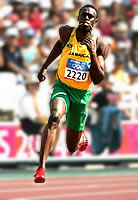
The lifecycle of preparation for any event has time dimensions. The period of preparation depends upon the nature of the sport. It can even start early in some cases. Take the case of Michael Phelps. Phelps was just 11 when his coach Bowman discovered the talent in him. Usain Bolt didn’t come out of nowhere. He’s been training since childhood and won at the international level at 15. The point here is to identify the seed of excellence in a sportsperson before nurturing it.
If one has a look at the gymnasts, it is clear that champions who are themselves fledgling teenagers actually start the sport at an early age. The younger a gymnast, the suppler the body movements. Nadia Comaneci, the legend achieved a perfect ten when she was in her early teens, way back in the 1976 Montreal games.
The situation hasn’t changed much since then. Shawn Johnson of the United States who is just 16 years old and had been preparing for her debut Olympics after having been identified as a special talent, ultimately won the gold in one event beating the current world champion Nastia Liukin at Beijing. Nastia herself has been a world-beater for some time and is still only 19!
To know one’s objective is also important. It is necessary that appropriate targets are set. Someone who’s not good to qualify for an Olympics has to carry a much harder workload and a more demanding preparation routine for the next Olympic games than someone who’s lesser distance away from being a potential winner. The expected performance graph trend and higher Key Performance Indicators are much tougher to attain for a lesser-endowed athlete. Kenyans, for instance, felt at Beijing that Pamela Jelimo can create a sensation at the next Olympics in London four years from now. Jelimo, who is already a world-class athlete, has promise, speed and youth on her side. The Indian hockey team, on the other hand is miles away from raising a hair of expectation for the next Olympics, having been unable to qualify here!
Before starting out on projects, managers and team leaders must assign clear tasks to members in the team. One needs to list out the skills required to achieve the goals. Do we have the right people to do it? Is it the right balance? Preparing well for a project or task dictates that one must identify whether one who has been assigned the task can be prepared down the road to deliver performances at desired levels within a given time frame. The roles must be commensurate with the abilities of the employee. One must gauge the fit and stability in a team to structure the workflow better.
Tip: Know the potential of your team members to set true targets and achieve them
*******
High standards of preparation and enabling of Key Performance Indicators
Key Performance Indicators are measurements set beforehand and reflect the success factors in an organization. A KPI must be measurable. Kenya aimed to be the best African nation at Beijing. It succeeded, recording its best performance at the Olympics since their debut in 1956. At number 15 with 5 gold, 5 silver and 4 bronzes, they topped the continent’s tally. Like Jamaicans who ruled the sprints, Kenyans, too, exploited its distance running ability to the hilt. Isinbayeva too set herself new targets in the last 5 years and upped the pole vault standard regularly from 4.8m to 5.05m while swimmers broke records with each race.
China targeted the Beijing Olympics under Project 119, in which they planned to win 119 gold medals. Now, as everyone is over the moon applying plaudits and praises to China’s performance, the country itself feels that it has under-performed!!! And that’s because the number of gold medals it won were fewer than their target of 119!
Like in the case of preparation for Olympics they will differ from one organization to another. The KPIs for different types of businesses could differ, but the KPIs do indicate the levels of performance achieved. A business may have as one of its Key Performance Indicators the percentage of its income that comes from return customers. KPIs must reflect organisational goals and should be important to its success. Like in sports, they must also be measurable and attainable.
Tip: A Goal should have a Name or Number that is inspiring, measurable and unambiguous
*******
Discomfort in preparation means checking out how far you can go
Sportsmen always strive to go beyond what is easily achievable. Watch how sprinters, distance runners, rowers or other competitors as they strive to get to that finishing line and you will see them stretching that extra sinew, beyond what seems possible, over and over again in their efforts to be the best. The message here is: Take yourself out of your comfort zone as much as possible. Success does not come through staying within the familiar zone. Go beyond what you think you are capable of.
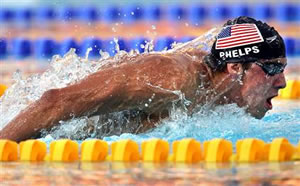
In a press conference, Michael Phelps talked about what his coach would say to him on days when he didn’t feel like training: Every day that you work is “money in the bank”. You keep putting money in the bank every day, and you can draw it out when you need it. Well, he certainly was able to draw out 8 Olympic Gold medals after all this hard work. In an entrepreneurial start-up, there are often times when you have to give up the more luxurious life of a professional, or as a management consultant you may have to live out of suitcases; but then preparing yourself well to set higher goals in a project or engagement always comes with some amount of discomfort.
Tip: Don’t back away at any discomfort, as long as you are on the right track
*******
Stay Focussed and Belief in Oneself will help optimum performance
Watch an individual sportsman as they prepare, and you will notice how focused they are on what they are doing. They have an ability to shut out the outer world, negative thoughts are ignored while they integrate their energies to concentrate on the action. No successful sportsperson ever begins a game or race with the expectation of losing. No matter what the odds are, one has to believe that you can win gold.
Consolidating one’s self-belief is part of training. Gold medallists say they have visualised again and again about being up on the podium. That is part of the preparation. Visualisation helps to keep us focused.
It gets us out of bed every morning because we are inspired to make that visualisation come true. Think big, dream big and make it happen. At Beijing before she executed the gold medal winning effort, Isinbayeva lay buried under a towel before the jump while others carried out theirs. Her logic was simple. She didn’t want to be affected by what others were doing and wanted to visualise her jumps in her mind instead.
A corporate executive, when preparing, must believe in his presentations, reports or interview performances. For instance, while going for interview, it is important to think like a champion sportsman. Have you ever imagined this: let me deliver like Phelps! Or like your favourite sportsman. The answer is: you will! See how top sportsmen conduct themselves before an event. To do that, believe in yourself and stay focussed on the present. All preparation can come to nought if the final moment isn’t included in the schedule of preparation. Building and strengthening of one’s temperament during preparation for the actual event is as important as the event itself.
Tip: Building Self belief is one of the biggest preparations
*******
Pressure can cause adverse reactions
Air rifle athlete Du Li was expected to win China's first gold medal in the Beijing Olympics. Buckling under the pressure of 1.3 billion expectant Chinese, she choked.
The champion hurdler Liu Xiang is a national hero in China. Being a national hero can be traumatic, as Xiang found out when he had to drop out due to an injury at the last moment. India’s Rajyavardhan Rathore raised expectations after his silver medal showing at Athens in 2004. His failure was a blow and he even thought of quitting the sport altogether, such was the shock that accompanied defeat. Anju Bobby George was placed 6th in a world championship meet a few years ago. But this time, her three mandatory jumps were faulty and she crashed out even before she began the contest.
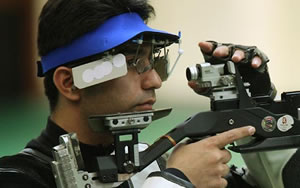
Compare that to the Indian boxers who were mostly unsung and hence didn’t carry the burden of too many expectations. Even gold medal winner Abhinav Bindra’s performance is a case study. In the Athens Olympics, Bindra had crashed out early. The shock and disappointment worked in his favour as he prepared. His past failure meant there was little pressure from the million strong viewers and media in India. The loss of Akhil Kumar can also be partially attributed to the pressure exerted by the media immediately after his stunning win over the world champion in the pre quarterfinals. In a country like India where gold is mostly mined and not won as prizes, it is perhaps natural to expect such a frenzied reaction to a victory.
Tip1: It’s easier to be unflappable when the going is good. Prepare to be cool in adversity, for that’ll help you overcome it.
Tip2: Excitement is temporary, Temperament is permanent.
*******
Manage preparations such that it pushes organisational objectives forward
Sports nations like Australia have a small population and yet always perform well at the Olympics. The reason for this is because there is an outdoors sports culture in the country. Australians pay and enjoy sport. The club systems work as encouraging platforms for youngsters to test their abilities. Champion athletes are willing products of the system. Much the same works for other democracies like the US, UK and Germany where sports evolve as a part of the culture. In China however, the system is devised to create an athlete out of an ordinary citizen. China's system "is very different from the dispersed training of Western countries," says Liu Fengyan, director of table tennis and badminton at China's sports ministry.
Set in the mould of the former Soviet Union, the system restricts stars from dating, and deducts a large part of earnings. The communal living imposed upon Chinese athletes at the Olympic Village would be unusual for American athletes. America's "flying fish," as Chinese news media called Michael Phelps, is free to decide issues of living while China's own "flying man," hurdler Liu Xiang, lived closeted in a government boarding school. Diver Wu Minxia spent 8 years at a training center. "I miss my parents, as I hardly ever go home, but I'm used to it by now, and it feels like home being here with my friends," Wu said. After every training session, Wu had to retire to a dormitory she shared with four divers by 10 p.m. Yang, one of China’s successful water sports athletes, didn’t see his parents in three years.
It’s important to check the compatibility of people with the organisational culture. Having a preparation ethic and performance management system similar to China’s in an organisation that’s moulded more like the US can prove to be a recipe for disaster. What works for one may not work for the other. Also, in a team where there is a high degree of motivation, the sustainability of performance in the long run is higher, than one where dictatorial methods are preferred. Take for instance, the case of the former Soviet Union. The sports system, like China today, was superb. However, its produced not supremely fit human beings, but gave us efficient robots. The US, in contrast, has a system that is more democratic and hence, sustainable.
Tip: The preparation for performance must blend into the organisational culture in order to better promote excellence.
*******
Performance management as a process
Performance management is a never-ending process. Michael Phelps has gone back after the Beijing Olympics, aiming to train harder and smarter for the next Olympics so that he can win more golds. Tennis star Rafael Nadal left after the Games to prepare for the US open, so that he can keep winning. Federer prepares differently for different tournaments. As a process in any organisation it’s a cycle of preparation, setting goals, monitoring achievement of those goals, sharing feedback, evaluating the employee's performance, rewarding performance and incorporating adjustments to achieve those goals more effectively in future.
The competitiveness, the limited resources, the concept of market leaders and gold medal winners, the importance and reward for excellence and quality, the jostle and scrap to do well and the ability to mark performance make the two very similar. The Olympics, and sports, in general offer perhaps a simpler performance measurement criterion than businesses. However the precept of preparation and performance remain the same in both. The former leads to the latter and so, performance management is a process that reflects its success on the final day, just as an assessment of KPIs in an organisation helps reveals the preparation and performance behind it.
Tip: Prepare, prepare, and prepare. Only then can you keep performing better.
*******
Sources:
http://www.nytimes.com/2008/06/21/sports/olympics/21athlete.html?pagewanted=1&_r=1
http://www.usatoday.com/sports/olympics/beijing/2008-08-19-china-atletes_N.htm
http://www.wealth-city.com/blog/personal-development/be-an-olympic-winner-in-your-home-business/
http://www.stuff.co.nz/thepress/4663831a28215.html
http://2008.sina.com.cn/en/js/2008-08-17/20137464.html
http://management.about.com/cs/generalmanagement/a/keyperfindic.htm
http://compassblogger.blogspot.com/2008/08/isinbayeva-i-am-sorry-not-world-record.html
http://www.tvrls.com/performace_management_system.html
, |
|
|
|
|
|
 | Messages/Opinions |
|
|
| | No messages yet! Be the first one to post a message here. |
|
Click Here to login and post message
|
| Indian Alumni and Students from the following Indian and Global Institutes are invited to be members of 6bridges.com: |
| |
| India |
| Business & Accounting Institutes : FMS, ICAI, IIFT, IIM(A), IIM(B), IIM(C), IIM(I), IIM(K), IIM(L), IRMA(Anand), ISB, JBIMS, MDI(Gurgaon), NITIE, NMIMS, SJMSOM(IIT Bombay), SPJIMR, TISS, XIMB, XLRI |
| Technology Institutes : BIT(Mesra), BITS(Pilani), COE-Guindy(Anna Univ.), DCE, IISc, IIT(B), IIT(M), IIT(D), IIT(G), IIT(K), IIT(Kgp),IIT(Roorkee), ISI(Kolkatta), ISM (Dhanbad), IT-BHU, Jadavpur Univ., National Institutes of Technology(RECs), PSG(Coimbatore), RVCE(Bangalore), VJTI |
| |
| Global |
| Business, Technology & Accounting Universities/Institutes : AGSM(Sydney), AIM(Manila), Caltech, Carnegie Mellon, Columbia, Cornell, Dartmouth, Duke, Georgia Tech, Harvard, ICAEW(UK), IMD(Switzerland), INSEAD, Judge(Cambridge), London Business School, Manchester, Melbourne Business School, Michigan, MIT, Northwestern, NYU, Princeton, Purdue, Queen's(Canada), Said(Oxford), Stanford, U.Chicago, U.Penn, UC Berkeley, UCLA, Univ. of Illinois-Urbana, Univ. of Southern California, Univ. of Virginia, Warwick, Yale |
|
|